Reports

Sources

Docs: Plots, Preferences, Powers Web App: Open a Parable in Ponder, then use Run Report or Schedule Report from the Report actions menu; the Report cascader in the header selects Current or a stored Report. A Report is one execution of a Parable’s pipeline Plots. Each run produces durable outputs that readers can select later, even after the Parable’s code changes. A Parable’s definition version identifies code and schema; a Report identifies produced data.

Run a Report now

  1. Open the Parable and choose Run Report.
  2. Parable captures the exact definition, the visible Preference membership and values, and your identity as the requester.
  3. The run is queued and produces real outputs before it is shown as complete. Pending, failed, empty, stale, unavailable, and incompatible results are shown as such; Parable does not switch readings to hide a failure.

Schedule Reports

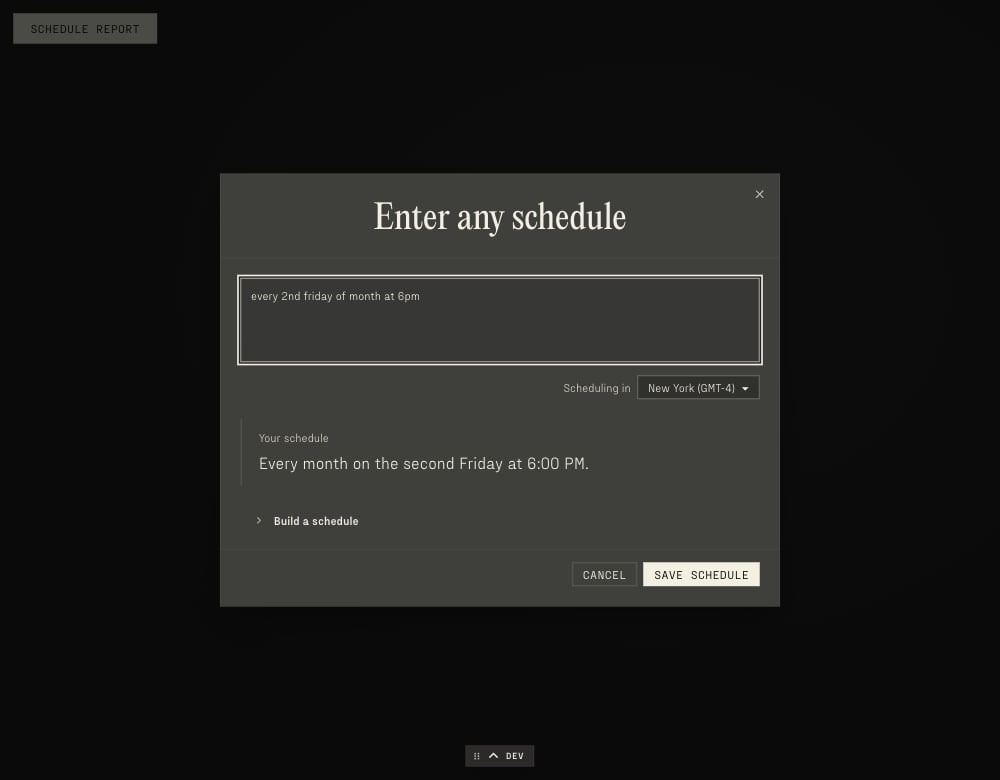
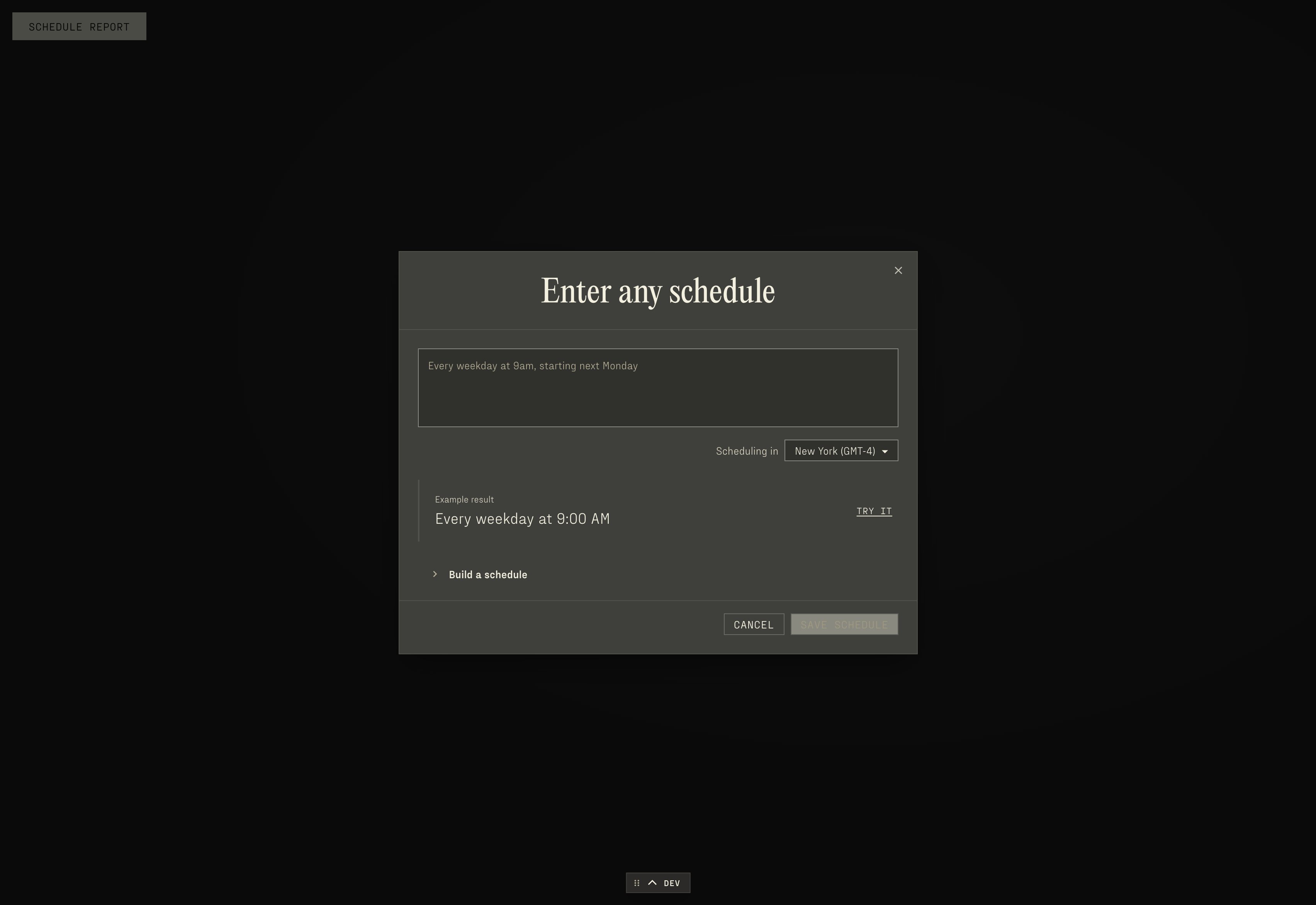
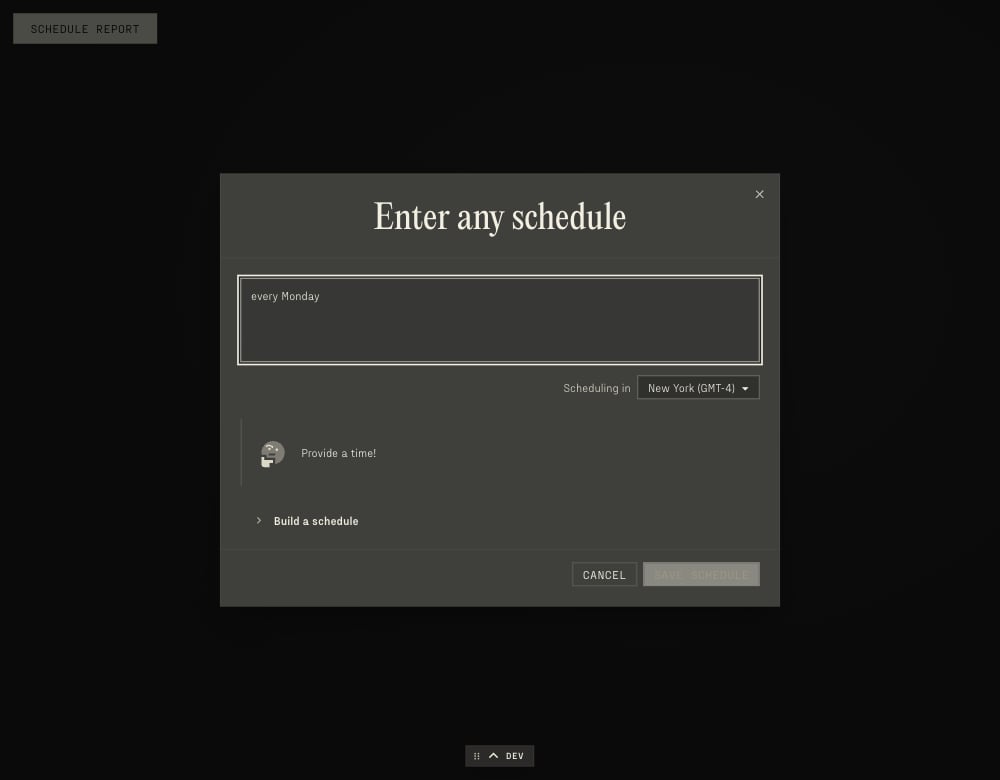
Choose Schedule Report, then enter a schedule in your own words. For example, Every weekday at 9am, starting next Monday. Review the interpreted schedule and upcoming runs, then choose Save schedule. Free-text schedule entry with a timezone selector, example result, and collapsed builder. New schedules use your browser’s timezone, shown beneath the input. Change it there if the Report should follow another timezone. Existing Plans keep their saved timezone and start. Upcoming runs are displayed in the selected timezone. Build a schedule opens the repeat, day, time, start, and end controls. Text entry and the controls edit the same Plan. Opening the controls does not change a saved schedule. Changing the time preserves its calendar dates, weekday exclusions, and seconds. If the controls cannot preserve a schedule’s details, saving those edits is disabled; enter a new schedule above to replace it. An example result appears before you enter anything. It is not saved until you try it and choose Save schedule. If a phrase cannot become a supported Plan, the input stays in place and shows We can’t Ponder that… Try something else! with a thinking icon. Edit the phrase or use the schedule builder. If only the time is missing, the message is Provide a time!. Add a time to the same phrase to continue. A malformed time still shows the general error. A schedule with a weekday but no clock time, showing Provide a time! Monthly ordinals work in words or digits: every 2nd Friday of month at 6pm means the second Friday of each month at 6:00 PM. For phrases such as every month at 9am, review the day shown in the interpretation and upcoming runs. That day is retained when you change the time in the builder. A monthly ordinal schedule interpreted as the second Friday at 6:00 PM. Plans support timed, daily-or-longer recurrences and a single timed occurrence. Time windows, multiple separate schedules, and sub-daily recurrences cannot be saved through this input. A recurring schedule combined with a separate one-time run, such as every Monday at 9am; tomorrow at noon, is rejected as a whole. Remove the additional schedule and try again. Seconds are supported and shown in the upcoming-run preview. Upcoming runs come from the server’s recurrence preview, which uses the same expansion engine as execution. See the recurrence preview reference for its input and output contract. The selected timezone and start keep relative dates and daylight-saving changes anchored to the intended local time. A one-time request runs once. Plans that repeat every few weeks or stop after a number of runs preserve their original start when reopened. Editing a schedule does not publish the Parable, and publishing does not run a Report or reset its schedule. Scheduled runs execute under the Workspace’s explicit service principal and its permissions, not the credentials of whoever created the schedule. If the scheduler is behind, missed occurrences coalesce into one run and the next occurrence is always in the future.
Read a Report

The Report cascader selects Current or a specific Report:
  • Current is the newest completed Report whose output fits the selected definition; it can come from an earlier compatible definition.
  • An explicit Report stays pinned. An unavailable or incompatible result does not fall back to Current.
Ordinary SQL Plots and previews may query completed pipeline outputs with their own parameters. Direct reads of a materialization keep their captured inputs and refuse different overrides. Reading a Report checks its captured inputs against current Policies, so a deleted or newly hidden input can make an old result unavailable rather than substituting today’s values. See Plots for plotApi.readReport.

Current limits

  • A Report cannot yet consume another pipeline Plot’s newly produced output in the same run; it can consume a compatible output completed in an earlier run.
  • Provider historical-input replay is limited: principal-dependent filters need the captured principal, and full Parable-context Provider filters can refuse materialization.
The built-in Reports Power carries these rules for Ponder when it designs a Report pipeline.

Reference